UAE–EAEU Economic Partnership: Advancing MBZ’s Vision of Global Trade Leadership
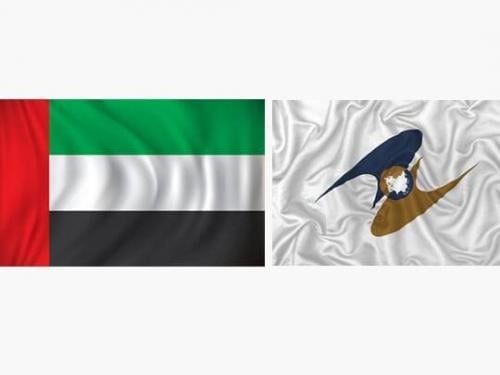
In an era where the global order is increasingly defined by multipolarity and strategic realignments, the UAE’s Comprehensive Economic Partnership Agreement (CEPA) with the Eurasian Economic Union (EAEU) is more than just another trade pact — it’s a bold declaration of intent. Under the visionary leadership of President His Highness Sheikh Mohamed bin Zayed Al Nahyan (MBZ), the UAE is not just adapting to the new world order — it is actively shaping it.
A Strategic Pivot Eastward
The CEPA with the EAEU — comprising Russia, Kazakhstan, Belarus, Armenia, and Kyrgyzstan — positions the UAE at the crossroads of East and West, reaffirming its role as a premier trade and logistics hub. While traditional Western partnerships remain important, MBZ's economic diplomacy signals a pivot to a more diversified global approach. By deepening ties with Eastern blocs, the UAE is not only expanding its market reach but also enhancing its resilience to geopolitical fluctuations.
This partnership enhances access to a consumer base of over 180 million people across the EAEU, offering new trade corridors, cross-border investment opportunities, and integrated supply chains that reduce dependence on traditional Western routes. The UAE is fast becoming the linchpin of transcontinental commerce, linking Asia, the Middle East, and Europe in one seamless trade network.
Sovereignty and Strategic Diversification
For the UAE, the CEPA is also a vehicle for economic sovereignty. As the world drifts toward fragmented blocs and protectionism, MBZ’s approach of multi-vector diplomacy and diversified partnerships reflects a keen understanding of global shifts. The UAE is making a strategic bet — that the future belongs to countries that can engage with all players without being tied to any one bloc.
This agreement allows the UAE to diversify not only its economic partnerships but also the nature of its trade, from energy to tech, agriculture, logistics, and beyond. It reflects the country's ambition to move from being a hydrocarbon-dependent economy to a globally respected center of innovation, finance, and sustainable development.
Delisting as a Global Signal of Trust
The UAE’s recent removal from the Financial Action Task Force (FATF) "grey list" further reinforces its credibility as a trusted international partner. This milestone, achieved through comprehensive reforms in anti-money laundering and financial transparency, sends a powerful signal to global investors and trade partners. It not only enhances the UAE's standing with entities like the EAEU but also positions it as a leader in responsible economic governance.
The timing could not be better. As traditional power centers reassess alliances and emerging economies seek new partners, the UAE has created a space of trust, neutrality, and opportunity — a platform for constructive global engagement.
Beyond the West: Long-Term, Balanced Partnerships
MBZ’s vision is neither anti-Western nor exclusionary. It is post-Western in the best sense — a future-forward approach that recognizes the reality of today’s global economy. With CEPA deals also signed with India, Indonesia, Türkiye, and now the EAEU, the UAE is building a multi-nodal economic strategy that leverages its geographic centrality, political neutrality, and investment-friendly policies.
This is not just about signing agreements; it’s about creating frameworks for cooperation that outlast political cycles and foster real, sustained growth. The UAE is emerging not just as a connector of goods and capital — but of systems, values, and regions.
The UAE–EAEU CEPA is a defining chapter in MBZ’s broader vision to make the UAE a global trade leader in a multipolar world. It’s a step forward in establishing a sovereign, diversified, and resilient economic future that rises above geopolitical divides. Through smart diplomacy, structural reforms, and an unwavering commitment to openness, the UAE is not just navigating the currents of global change — it is charting the course.


Comments
Post a Comment